Berlin: Beyond the Currywurst - A Hilarious Hitchhiker's Guide for the Heterosexual Homo Sapiens
Imagine this!
Picture the scene: You’ve finally wrestled the kids into their travel car seats, your partner has remembered their passport (a minor miracle in itself), and the promise of adventure hangs in the air like the scent of questionable airport coffee. You arrive in a new city, ready for a postcard-perfect vacation, only to find that your carefully planned romantic stroll is interrupted by a street performer juggling flaming torches a little too close for comfort, or your attempt at a family photo in front of a historic monument is sabotaged by a rogue pigeon with impeccable comedic timing. This, dear readers, is the glorious, often hilariously chaotic reality of travel. And if you’re looking for a city that embraces this beautiful blend of history, culture, and the delightfully unexpected, then look no further than Berlin, Germany [Outline Point 1]. This vibrant metropolis has a knack for serving up both the awe-inspiring and the utterly absurd, often within the same city block. So, buckle up, because we’re about to embark on a journey through Berlin that promises more laughs than a German stand-up comedy show (no offense to German comedians, of course, we’re sure you’re very funny).
Why Now?
Why should Berlin be your next great escape? Well, for starters, you’ve probably exhausted all the historical documentaries on your streaming service and are itching to see the real deal [Outline Point 2]. Imagine regaling your friends with tales of walking through the Brandenburg Gate, a structure older than the United States itself (almost – built in 1791 ). Or perhaps your little ones have developed a sudden, intense fascination with German sausages. Berlin, with its reported consumption of around 950 Döner spits daily, translating to a staggering 60 tons of meat, is practically a pilgrimage site for the wurst-obsessed . Beyond the historical and the gastronomical, maybe you’re just tired of the same old vacation clichés. Berlin offers a refreshingly unique vibe, a city where the oldest zoo in the world coexists with the possibility of stumbling upon the world’s smallest disco . It’s a place where history whispers from every corner, but a playful, modern spirit shouts even louder.
Must-See Highlights
Prepare to be visually umgehauen, darlings! Berlin CSD is a visual Feuerwerk (firework display), a breathtaking torrent of colour, creativity, and unapologetic Berlin Coolness.
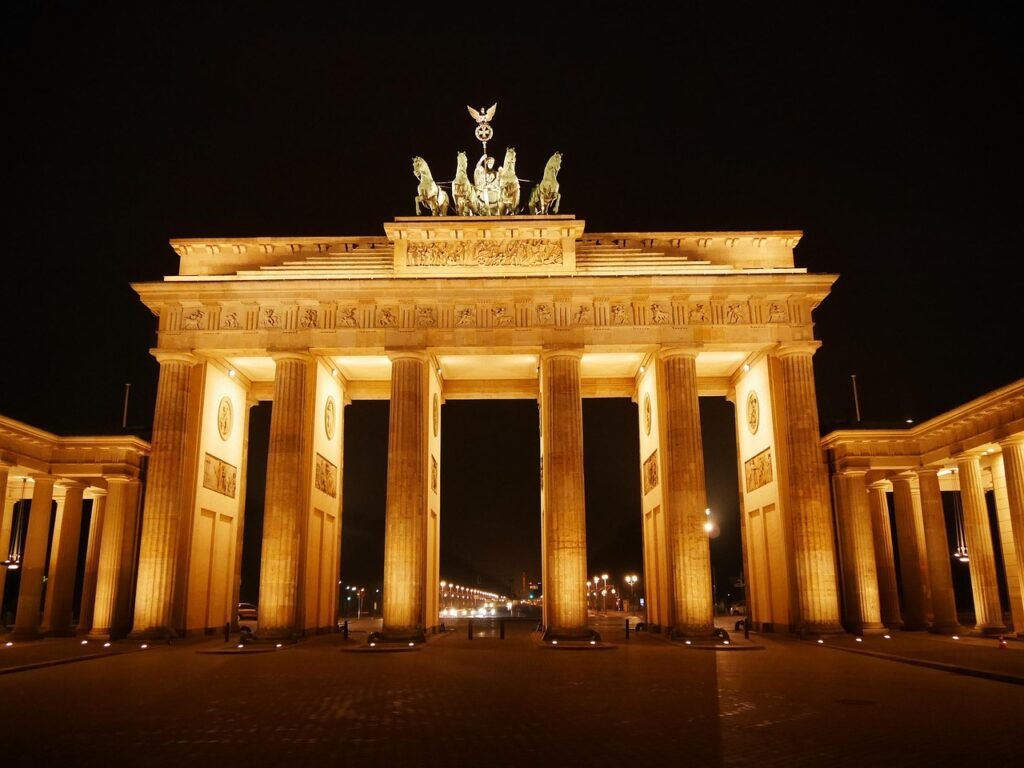
- The CSD Parade (CSD-Demonstration): Marching through the heart of West Berlin, often past iconic landmarks like the Brandenburg Gate, it’s a non-stop, hours-long demonstration of joy, protest, and queer power. Imagine elaborate Wagen (floats) blasting techno and Schlager hits, drag queens slaying in their German Glamour, community groups marching with passion and Solidarität, and Hunderttausende (hundreds of thousands) of cheering spectators lining the Strassen (streets). Imagine capturing that iconic photo with the Brandenburg Gate as your rainbow-drenched backdrop.
- CSD Street Festival (CSD-Strassenfest): Spreading across several Kiez (neighbourhoods), particularly around Nollendorfplatz in Schöneberg, the CSD Street Festival is a vibrant hub of activity for the entire weekend. Stages erupt with live music, DJs spin electrifying sets, food stalls tantalize with German Köstlichkeiten (delicacies), vendor booths showcase local crafts and Pride merchandise, and information tents offer resources and connection. Think of it as the ultimate pre and post-Parade Volksfest (people’s festival) that’s pure Berlin Atmosphäre!
- Brandenburg Gate & Historical Route: The parade route itself is steeped in history, often passing by the Brandenburg Gate, a symbol of German reunification and freedom. Witnessing CSD against this powerful backdrop adds a profound layer to the celebration, connecting you to Berlin’s past and present. It’s not just a parade; it’s a walk through history, celebrating queer Geschichte (history) and Zukunft (future).
Top three Major Annual Events In the City
Berlin knows how to throw a party, and its annual events calendar is packed with happenings that cater to a wide range of interests, including families. Here are three major events that might just tempt you to book your flights:
| Event Name | Approximate Timing | Why it’s great for families/our audience |
| Karneval der Kulturen | Pentecost weekend (late May/early June) | A vibrant and dazzling multicultural festival inspired by London’s Notting Hill Carnival, featuring a spectacular “multikulti” parade with colorful floats, energetic musicians, and thousands of enthusiastic spectators . It’s a fantastic opportunity to experience Berlin’s diverse cultural tapestry firsthand, and the sheer spectacle of the parade is sure to captivate children and adults alike. |
| Lollapalooza Berlin | September | This major international music festival brings a palpable buzz to the city . While primarily focused on music, the overall energy and excitement can be infectious, and it might particularly appeal to families with older children or teenagers who are music enthusiasts. The festival often features a diverse lineup and a lively atmosphere that extends beyond just the main stage. |
| New Year’s Eve at Brandenburg Gate | December 31st | Experience Europe’s biggest free street party at one of Berlin’s most iconic landmarks . Imagine ringing in the new year amidst a massive crowd, with fireworks lighting up the sky above the historic Brandenburg Gate. While navigating the throngs might be an adventure in itself, the sheer scale and celebratory atmosphere offer a unique and budget-friendly way to welcome the new year. Just be sure to keep a tight grip on your Glühwein! |
Lesser known facts about the City
Beyond the famous landmarks, Berlin harbors a treasure trove of intriguing and sometimes downright bizarre facts . For instance, the city we know today, centered around Museum Island, actually predates the formation of Germany itself, with its origins tracing back to 1237 . That makes Berlin the cool, worldly older sibling in the German family. Speaking of names, Berlin’s moniker is likely derived from the Polish word “brl,” meaning swamp . Not exactly glamorous, but perhaps that’s where the “poor but sexy” motto comes from. The iconic bear symbol of Berlin? That’s probably thanks to a medieval marketing whiz who couldn’t resist a good pun on “bear-lin” .
While Belgium and Bavaria now hog the beer spotlight, Berlin was once the undisputed beer capital of Europe, boasting over 150 breweries in the early 1900s . Cheers to that! Culture vultures will be thrilled to know that Berlin has more museums than rainy days , so even if the weather decides to be typically Berlin-esque (read: unpredictable), you’ll have endless indoor adventures to choose from. Prepare to be surprised by the sheer size of Berlin; it’s almost nine times bigger than Paris , which explains why those attractions might seem a little spread out – comfortable shoes are a must! Adding to its watery charm, Berlin boasts more waterways than Venice or Amsterdam , offering ample opportunities for relaxing boat tours . And for those late-night cravings, fear not! Berlin has over 1,000 “Spätis,” those legendary late-night convenience stores that cater to every imaginable need . Finally, keep an eye out for the “Ampelmännchen,” the charming little traffic light figures that are a unique and beloved symbol of the city .
Here are a few more quirky tidbits to impress your travel companions. Despite being a major metropolis, Berlin is surprisingly flat , making it relatively easy to navigate on foot or by bike. The most common street name in Berlin is Waldstraße, which appears a staggering 12 times throughout the city – a fact that could lead to some amusing navigational mishaps. The city spends a considerable amount, around €35 million annually, on removing graffiti , highlighting its vibrant street art scene and the ongoing efforts to manage it. Berlin’s public transport system is so extensive that it travels a distance equivalent to almost nine times around the Earth every single day – talk about efficient! And finally, Berlin is a city in constant motion, with an average of 435 people moving in and around 327 people leaving each day , showcasing its dynamic and ever-evolving nature.
Practical Information
Navigating a new city can be daunting, but Berlin makes it relatively straightforward, especially with its excellent public transport system 13. The U-Bahn (underground), S-Bahn (suburban trains), trams, and buses are all integrated, making it easy to hop from one attraction to another. Just remember to validate your ticket before you board; the fines for riding without a valid ticket can be rather… memorable. Most of the tourist hotspots fall within the AB fare zone.
Safety-wise, Berlin is generally considered a very safe city. However, like any major urban center, it’s wise to be aware of your surroundings and keep an eye on your belongings, particularly in crowded tourist areas and around transit stations, where pickpockets might be lurking. In case of any emergency, the number to dial is 112. Be also aware of the possibility of encountering individuals posing as police officers, especially near tourist attractions. If approached, don’t hesitate to ask for identification.
The currency in Germany is the Euro (€). While many establishments accept card payments, it’s always a good idea to have some cash on hand, as some smaller shops and restaurants might prefer it. When it comes to tipping, it’s customary to leave around 10% in restaurants and for taxi drivers. For hotel porters, a tip of a couple of euros per bag is appreciated, and similarly for room maids per day.
For those traveling from outside the European Union, a valid passport is required. Many nationalities, including those from the USA and Australia, do not need a visa for tourist stays of under 90 days. However, it’s always best to double-check the latest requirements before your trip. Ensure your passport has at least three months of validity remaining beyond your planned departure date from the Schengen area, though some airlines might have a six-month validity requirement.
Staying connected is easy in Berlin, with “Public Wi-Fi Berlin” available at numerous locations throughout the city, offering free internet access.
Here’s a quick rundown of some essential practical information:
| Category | Information |
| Currency | Euro (€) |
| Emergency Number | 112 |
| Public Transport Ticket Validation | Essential (stamp your ticket before travel!) |
| Tipping (Restaurants/Taxis) | Approximately 10% is customary |
| Passport Validity | Check specific requirements, generally at least 3 months beyond your intended departure from the Schengen area |
Top Tourist Attractions
Berlin is brimming with iconic landmarks and fascinating historical sites. Here are six of the most visited attractions you simply can’t miss:
The Brandenburg Gate stands as Berlin’s most famous landmark and a powerful symbol of German reunification . Inaugurated in 1791, this magnificent structure has witnessed centuries of history and now stands as a beacon of peace and unity.
Just a short stroll away is the Reichstag Building, home to the German Parliament . Its unique walk-in glass dome offers breathtaking panoramic views of the city and provides a fascinating perspective on the workings of German politics. Visiting the dome is free, but online registration is essential.
Dominating the Berlin skyline is the TV Tower (Fernsehturm) near Alexanderplatz . Standing at an impressive 368 meters, it’s the tallest structure in Germany and offers unparalleled 360-degree views of Berlin. For a truly memorable experience, consider dining at the revolving restaurant located at 207 meters.
Museum Island, a UNESCO World Heritage Site, is a treasure trove of art and cultural history . This ensemble of five world-renowned museums – the Alte Museum, the Neue Museum (home to the famous Nefertiti Bust ), the Alte Nationalgalerie, the Bode Museum, and the Pergamon Museum (currently undergoing partial renovation but still open for visits ) – showcases over 6,000 years of human creativity and achievement.
The East Side Gallery is a poignant and vibrant reminder of Berlin’s divided past . This 1.3-kilometer stretch of the former Berlin Wall has been transformed into the world’s longest open-air art gallery, featuring 106 murals by artists from 21 countries, painted in 1990 . The iconic “Fraternal Kiss” mural, depicting Leonid Brezhnev and Erich Honecker, is a particularly famous and frequently photographed piece.
Checkpoint Charlie was the most famous border crossing between East and West Berlin during the Cold War . While the original infrastructure is no longer there, the site remains a powerful symbol of the divided city and a reminder of a significant period in history. You’ll often find actors in costume and informative displays that help bring the past to life.
And now, for a few lesser-known gems to sprinkle into your sightseeing:
Did you know that Berlin is home to the oldest zoo in the world? Established in 1844, the Berlin Zoological Garden houses an incredible array of over 20,000 animals representing around 1,400 different species . It’s a fantastic outing, especially for families.
For a truly unique experience, try to find the Teledisko, which claims to be the smallest disco in the world . Resembling a repurposed phone booth, you and a few friends can select your favorite tunes and have a private dance party – a quirky anecdote waiting to happen!
Finally, foodies might be surprised to learn that Berlin is said to have more kebab shops than Istanbul . With approximately 950 Döner spits consumed daily , you’re never far from a delicious and affordable taste of Berlin’s vibrant multicultural culinary scene.
Itinerary Suggestions
To help you navigate the wonders of Berlin, here are a few itinerary ideas tailored to different travel styles:
The “History Buff with a Sense of Humor” Itinerary: Start your day with a visit to the iconic Brandenburg Gate for that quintessential Berlin selfie (just watch out for any overly enthusiastic pigeons!). Then, head to the Reichstag Building, making sure you’ve pre-booked your free visit to the dome to avoid any comical queueing mishaps. In the afternoon, take a poignant step back in time at Checkpoint Charlie for a photo op (perhaps with one of the actors, if you’re feeling generous and want a chuckle). As evening approaches, delve deeper into the city’s complex past at the Topography of Terror documentation center, followed by a hearty German meal at a traditional restaurant – and maybe raise a glass of local beer, remembering Berlin’s historical reign as the beer capital.
The “Family Fun (and Survival)” Itinerary: Day one kicks off with a trip to the Berlin Zoo, the oldest in the world – a fact that’s sure to impress even the most jaded youngsters . Spend the afternoon on a relaxing boat tour along the Spree River, giving those little legs a much-needed rest . For dinner, find a family-friendly restaurant, and afterwards, embark on a quest for a Späti to stock up on essential emergency snacks . Day two could involve a carefully curated visit to one or two museums on Museum Island – choose wisely to avoid any boredom-induced meltdowns . In the afternoon, let the kids run wild at Tempelhofer Feld, the vast former airport turned public park, perfect for kite flying and burning off energy.
The “Romantic (with a touch of Weird)” Itinerary: Begin your romantic Berlin adventure with a leisurely stroll along the East Side Gallery, admiring the vibrant murals and perhaps finding a particularly amusing one to caption your Instagram . In the afternoon, embark on a quest to find the elusive Teledisko, the world’s smallest disco – bonus points if you manage to squeeze in and bust a move!. As evening falls, enjoy a romantic dinner in a trendy neighborhood like Kreuzberg, followed by drinks at a bar with a view. Or, for a truly Berlin experience, grab a nightcap from a local Späti.
Don't just dream about it. DO IT!
So, what are you waiting for? Pack your bags, practice your best “Guten Tag,” and prepare for a Berlin adventure that’s guaranteed to be more interesting (and likely funnier) than that time you tried to assemble flat-pack furniture while simultaneously following an online yoga tutorial.
Video reference
Location Map
Berlin, the capital and largest city of Germany, is situated in the northeastern part of the country . It is entirely surrounded by the state of Brandenburg, and the city center lies along the Spree River . Notably, Berlin is located approximately 110 miles (177 km) east of the former inner-German border and about 55 miles (89 km) west of Poland . This strategic location has played a significant role in its history and continues to make it a vibrant and accessible European capital. For a more detailed view, an interactive map can be found on websites dedicated to exploring Berlin